

Ireland remains a hub for multinational technology companies while also supporting a growing number of indigenous software businesses and AI-focused start-ups. As organisations continue to accelerate software delivery, the role of Quality Assurance is evolving beyond traditional testing. Increasingly, employers are looking for Quality Engineers who can combine automation, software engineering, cloud technologies and AI-assisted workflows to deliver quality throughout the software development lifecycle.
Drawing on conversations with Software QA professionals and hiring managers across the industry, we examine the key trends, insights and factors shaping Ireland’s QA landscape.
#1 Software QA Landscape
Software Quality Assurance is no longer solely about finding defects before software reaches production. Today’s QA professionals contribute across the entire Software Development Lifecycle (SDLC), helping teams build quality into products from the outset.
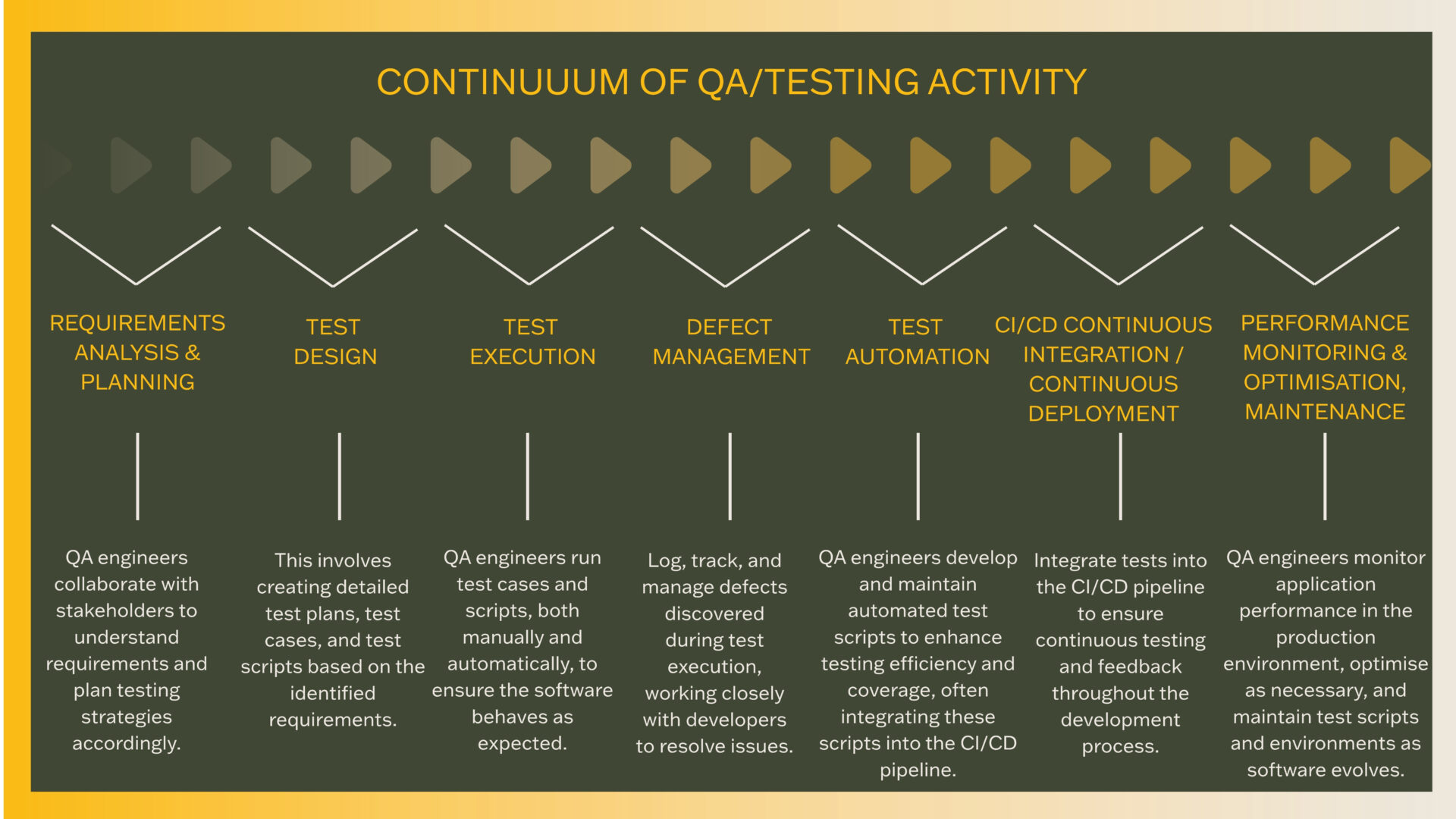
A Software QA Engineer’s responsibilities typically span a continuum of activities, from test planning and design through to automation, execution, performance monitoring and ongoing quality improvement. The balance of these activities varies depending on the organisation, product and team structure, as illustrated below.
#2 Factors Influencing QA Roles
Job titles in Software QA and Test Automation can often be misleading without context. Two individuals with the same title may have very different responsibilities, technical depth and market value. The following factors continue to have the greatest influence.
1. Team and Company Size
In smaller organisations, QA Engineers often take ownership across multiple testing disciplines, including functional, automation, API, performance, security and exploratory testing.
In larger multinational organisations, responsibilities are typically more specialised, with engineers focusing on particular products, platforms or testing disciplines. Collaboration also becomes increasingly important as QA teams work closely with developers, architects, product managers and DevOps engineers across multiple delivery teams.
2. Scope of Responsibilities
Experience and seniority continue to shape the role. Junior and mid-level QA Engineers typically focus on designing and executing automated and manual tests.
Senior QA Engineers increasingly contribute beyond test execution by:
- Designing automation frameworks
- Influencing testing strategy
- Mentoring other engineers
- Improving engineering processes
- Integrating testing into CI/CD pipelines
- Championing quality across the SDLC
This reflects the continued industry shift from traditional QA towards Quality Engineering.
3. Automation, Software Engineering and AI-Assisted Testing
As software systems become increasingly complex, employers are placing greater emphasis on automation and software engineering skills.
Modern QA Engineers are increasingly expected to work with browser automation frameworks such as Playwright and Selenium, alongside Appium for mobile testing. Playwright has seen particularly strong adoption for modern web applications, while Selenium remains widely used across many enterprise environments.
Strong programming skills in languages such as Python, Java, C# or JavaScript/TypeScript are becoming increasingly valuable, particularly for engineers responsible for designing and maintaining automation frameworks.
AI-assisted engineering is also becoming part of everyday QA workflows. Rather than replacing testers, AI tools are helping engineers accelerate:
- Test case creation
- Test maintenance
- Debugging and failure analysis
- Synthetic test data generation
- Documentation
- Repetitive automation tasks
The greatest value comes from QA professionals who can use these tools effectively while continuing to apply human judgement, risk assessment and critical thinking.
While purely manual testing opportunities continue to decline, manual exploratory testing remains an important part of quality assurance, particularly within regulated industries and for complex user journeys.
4. Cloud Technologies and Modern Software Architectures
Cloud platforms continue to shape modern QA practices. Experience testing cloud-native applications running on AWS, Azure or Google Cloud is increasingly valuable, particularly where applications use microservices, APIs, distributed systems or serverless architectures.
Engineers who understand API testing, cloud infrastructure and CI/CD pipelines bring greater flexibility and value to engineering teams.
5. Web, Mobile and API Testing
Software QA Engineers who can test across multiple platforms remain highly sought after. In addition to traditional web and mobile testing, employers increasingly value experience testing REST APIs, validating JSON payloads and working with service-based architectures.
As organisations continue adopting microservices, API testing is becoming an increasingly important component of modern quality engineering.
#3 Base Salary
Due to the range of variables discussed above, using fixed salary bands can often be misleading. Factors including company size, industry, technical environment, location, leadership responsibilities and specialist skills all influence compensation.
Engineers with strong automation experience, modern programming skills, cloud exposure and the ability to lead quality initiatives continue to command the strongest salaries.
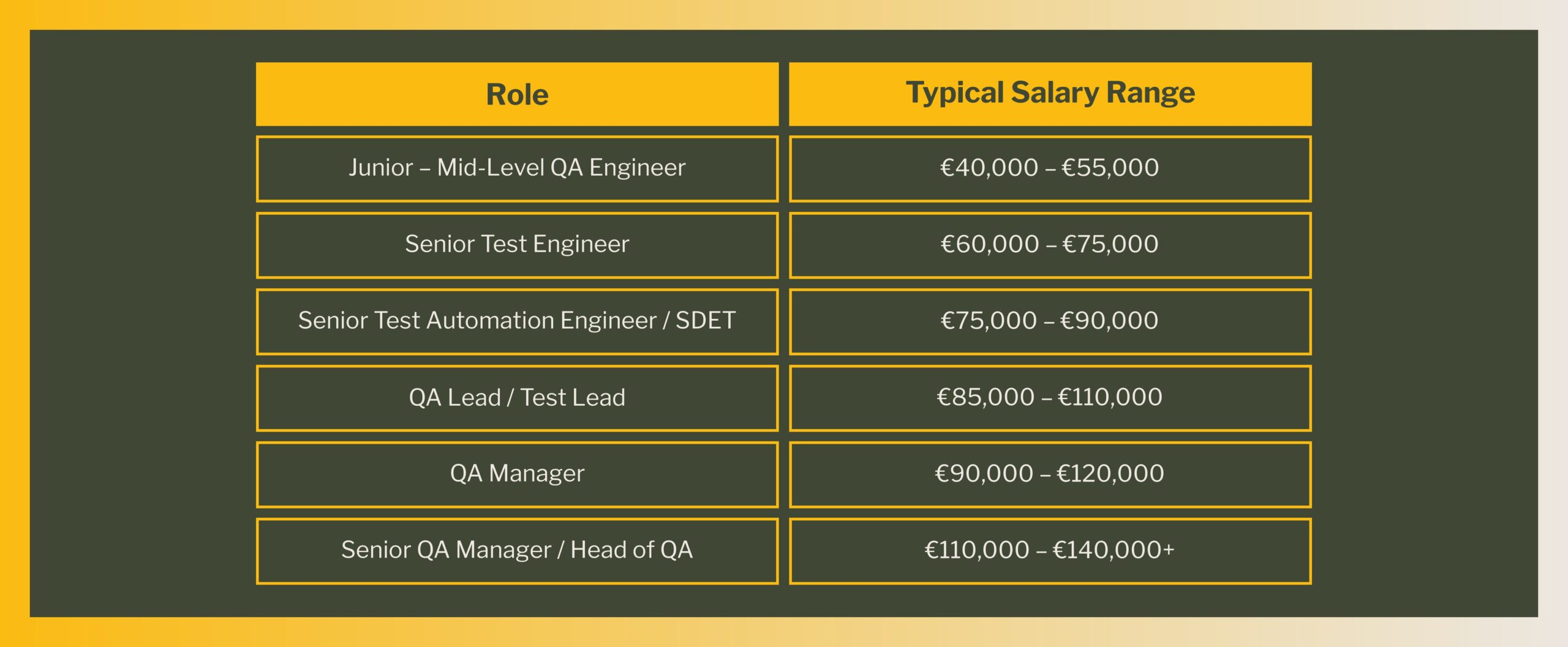
Salary levels can vary significantly depending on location, industry, company size, and technical depth. Organisations based in Dublin, particularly larger technology companies and multinational engineering teams, will typically offer salaries up to 20% higher than regional markets for comparable QA engineering roles.
If you would like to discuss salary expectations specific to your role, location or experience, please contact Rachel McGuckian at Barden for a confidential discussion.
#4 Current Snapshot of the Software QA Talent Pool
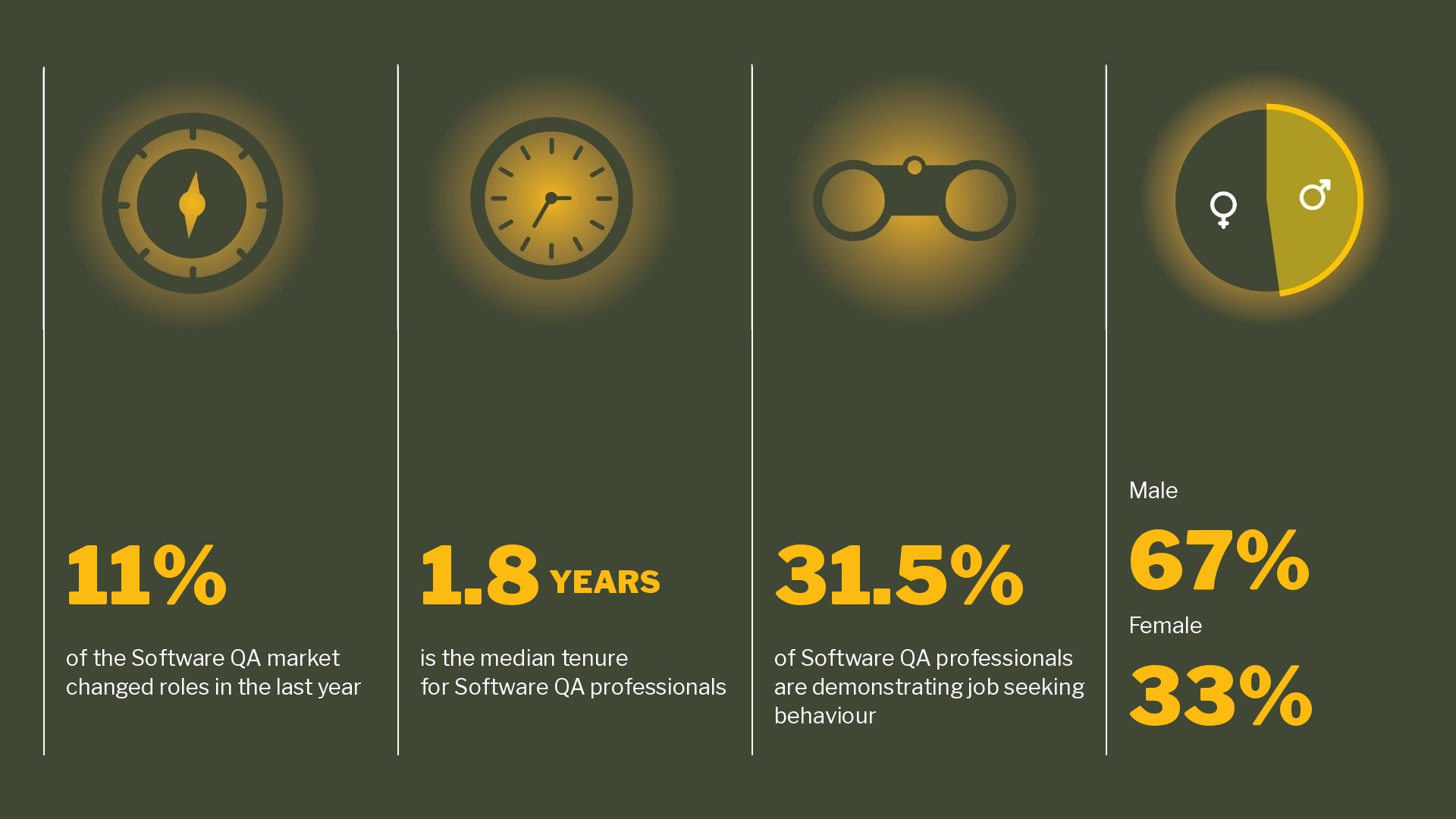
Alongside the broader software engineering market, we continue to see demand strongest for automation-focused QA Engineers.
Purely manual testing opportunities continue to reduce, while demand remains strongest for professionals who combine automation, programming capability and cloud experience.
Many organisations are also investing in upskilling existing QA teams rather than hiring large numbers of additional engineers, particularly around automation and AI-assisted engineering practices.
#5 Projected Challenges for the Next Six Months
For Employers:
AI-Assisted Quality Engineering:
- AI is no longer only something QA teams need to test – it is increasingly becoming part of how they work.
- Many organisations are adopting AI-assisted tools to accelerate test generation, automate repetitive work, assist with debugging, generate synthetic test data and improve automation maintenance.
- The challenge is ensuring engineers can use these tools effectively while maintaining appropriate quality standards and human oversight.
Full-Lifecycle Quality:
- Shift-left testing remains an established best practice for identifying issues earlier in development.
- At the same time, shift-right practices such as production monitoring, observability and continuous feedback are becoming increasingly important, enabling engineering teams to validate software behaviour in real-world environments.
- Successful organisations are embedding quality across the entire software development lifecycle rather than treating testing as a separate phase.
Security, Accessibility and Performance:
- User expectations and regulatory requirements continue to increase.
- Performance testing, security testing and accessibility testing are becoming increasingly important, particularly for organisations operating within regulated industries or serving large customer bases.
For Talent:
Expectations of QA Engineers continue to expand, with employers increasingly seeking professionals who contribute beyond traditional test execution through automation, software engineering, cloud technologies and collaboration across engineering teams.
Experience with CI/CD pipelines, API testing and AI-assisted engineering tools is becoming increasingly valuable. As QA evolves towards Quality Engineering, those who continue developing their technical skills, critical thinking and ability to work across the software development lifecycle will remain highly competitive.
In Barden, we understand that each team, role, and requirement is unique. If you would like to discuss what tactics and approaches would suit you, please feel free to contact Rachel McGuckian, our Software QA Talent Advisor & Recruiter here in Barden (rachel.mcguckian@barden.ie); we’re where leaders go before they start looking for Software QA talent.
This information is accurate as per July 2026 and will be updated periodically. Data sources include Barden Proprietary Data, LinkedIn Analytics and other 3rd party data sources. If you have a request and would like real-time information to inform your hiring decisions, contact Rachel McGuckian at rachel.mcguckian@barden.ie.