

 Jump Back


If you’re hiring an AR professional this quarter, here are some things you need to know…
AR by any other name is still accounts receivable. The exact role of an Accounts Receivable professional is shaped by the specific processes and procedures a company uses to manage customer invoicing and collections. This typically includes generating and sending invoices, tracking payments, following up on overdue accounts, reconciling discrepancies, maintaining accurate financial records, and ensuring timely collection of outstanding balances, but the name varies depending on the company. You might know it as:
- AR
- OTC (Order to Cash)
- O2C (Order to Cash)
- Credit Control
- Billing & Collections
- Accounts Receivable
Accounts Receivable and Credit Control are often treated as different functions, but the distinction is mostly about emphasis. AR is transactional—raising accurate invoices, maintaining balances, and recording payments. Credit Control is preventative—managing customer risk, setting credit terms, and chasing overdue debt.
The nuance is that AR manages what’s already happened, while Credit Control shapes what should happen. Ultimately, though, they serve the same goal: converting sales into cash and protecting cash flow. For simplicity, we will refer to these roles collectively as AR professionals.
We meet hundreds of professionals every year across a wide variety of companies, structures, and jurisdictions and here is some of what we’ve learned from them over the years.
#1 Job Seeking Behaviour of AR Professionals
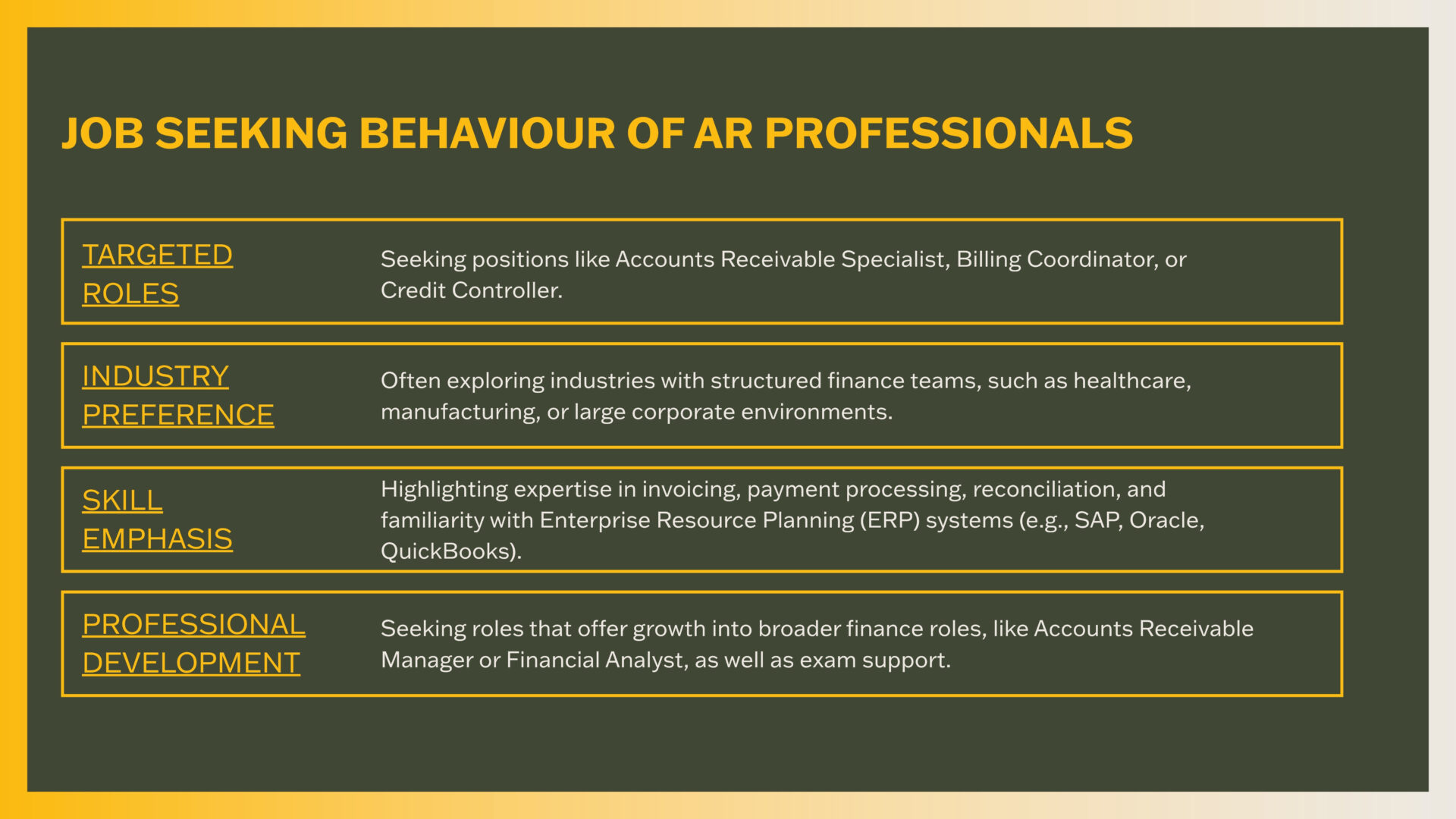
Accounts Receivable professionals tend to show two clear job-seeking behaviours. Some are highly driven and focused on career progression, looking for roles that offer a step toward management or a move into broader accounting functions. Others are more influenced by practical factors such as salary, industry, and whether the business operates in a B2B or B2C environment, valuing stability and fit over rapid advancement.
An Accounts Receivable professional’s job-seeking behaviour typically focuses on roles where they can apply their skills in managing incoming payments, maintaining financial records, and ensuring timely collection of outstanding invoices. Key aspects of their job search include:
#2 Salary
For AR talent, it can be all about the base. Here is what you would expect to pay today:
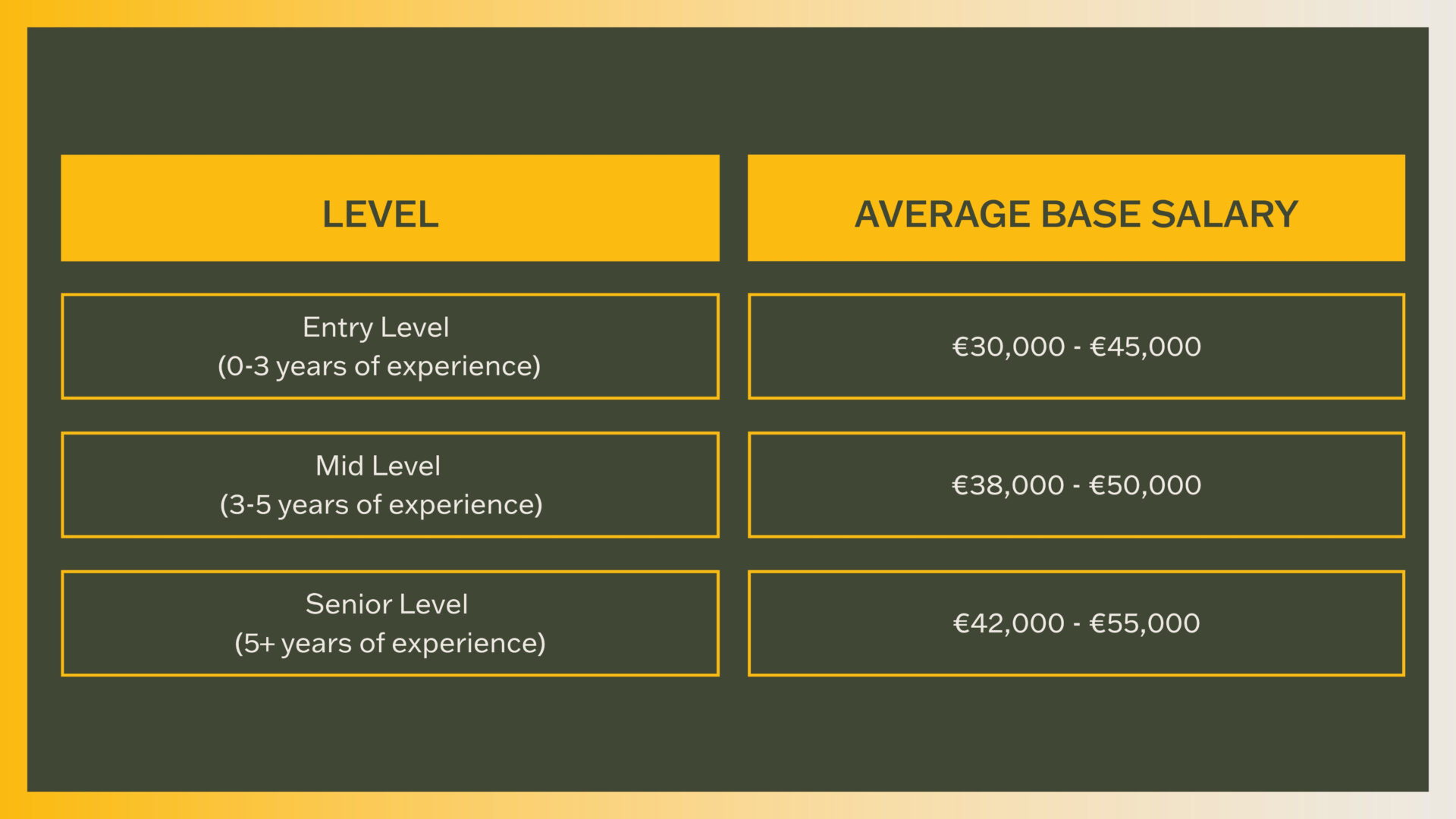
You can expect a 10-15% reduction on the above numbers, when considering appointments outside of Leinster. For bespoke advice please contact our team; phonsie.irwin@barden.ie (Leinster) or tara.higgins@barden.ie (Munster).
It’s important to note some caveats to the salary ranges above. Leading a team—typically 1–5 people (€60,000 – €65,000) or 5+ people (€70,000+)—can increase compensation. Similarly, roles focused on specific projects, such as transformation, automation, or AI, may command higher pay. The extent of any increase generally depends on the proportion of time spent on day-to-day responsibilities versus project-based work.
#3 Continuum of Activity
In AR, scale plays a crucial role in shaping responsibilities. Generally, the larger the AR team, the more specialised each role becomes, focusing on a smaller segment of the workflow. On the other hand, smaller teams require broader involvement across the entire process. Simple. Below is a breakdown of the tasks an AR Specialist typically handles. Their day-to-day focus — or “balance of activity” — meaning the tasks they spend most of their time on, is a strong indicator of their seniority and, ultimately, their salary.
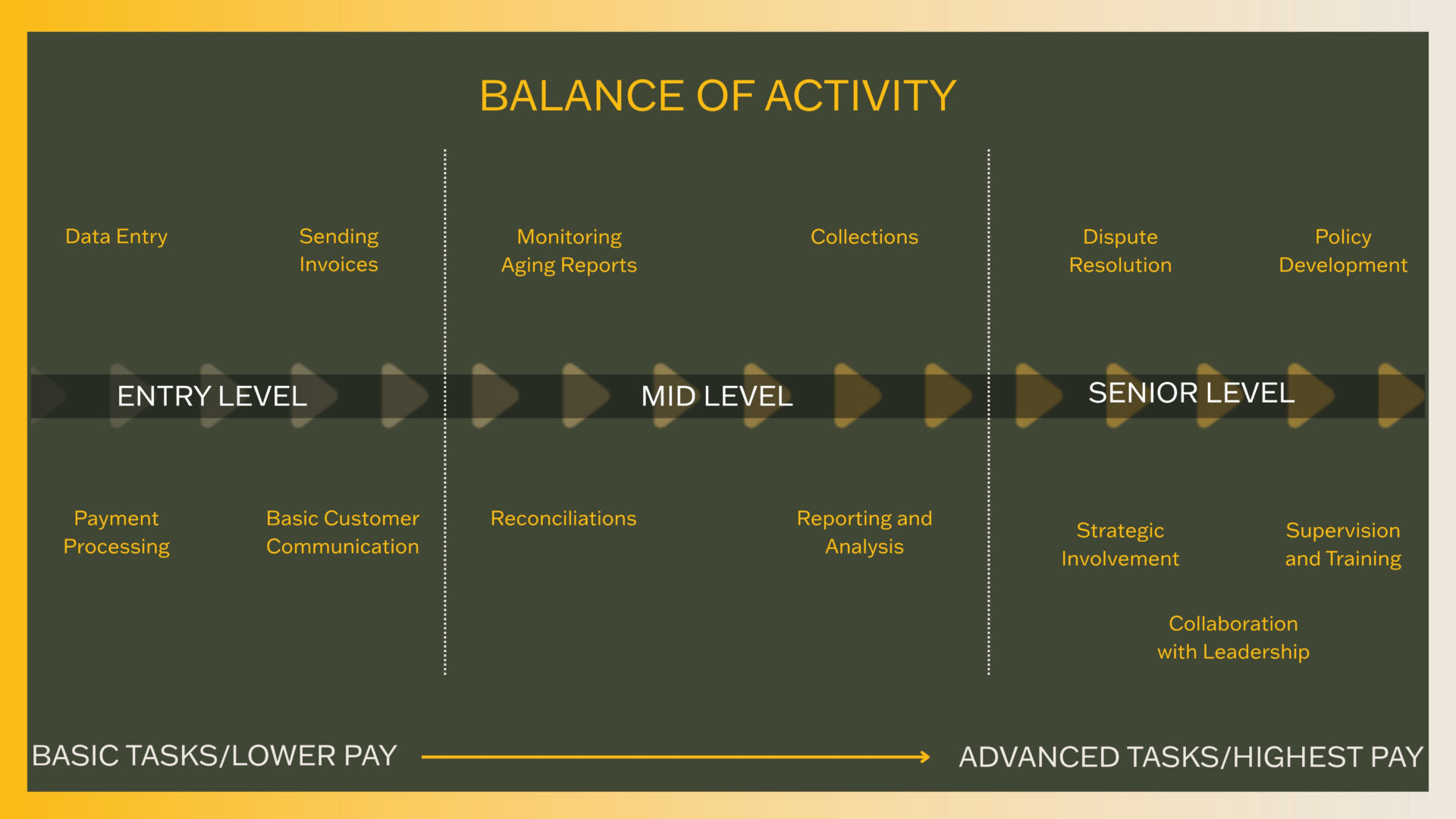
At the entry level, the job is mostly about processing and recording payments. As you move up, it becomes more about problem-solving, analysis, negotiation, and financial strategy. Senior AR Specialists may even have a say in shaping the company’s financial policies.
#4 Demand vs Supply
The continued shift in the market has given further rise to supply of AR professionals seeking employment opportunities across Ireland. The demand or open roles across this space is slightly down on last year.
The surplus of talent has allowed managers to be selective in their hiring processes, as the supply of accounts receivable talent exceeds the available job opportunities. However, this surplus relates specifically to junior and mid-level AR professionals, with the demand for senior and specialised talent still being identified in the ‘very high demand’ category.
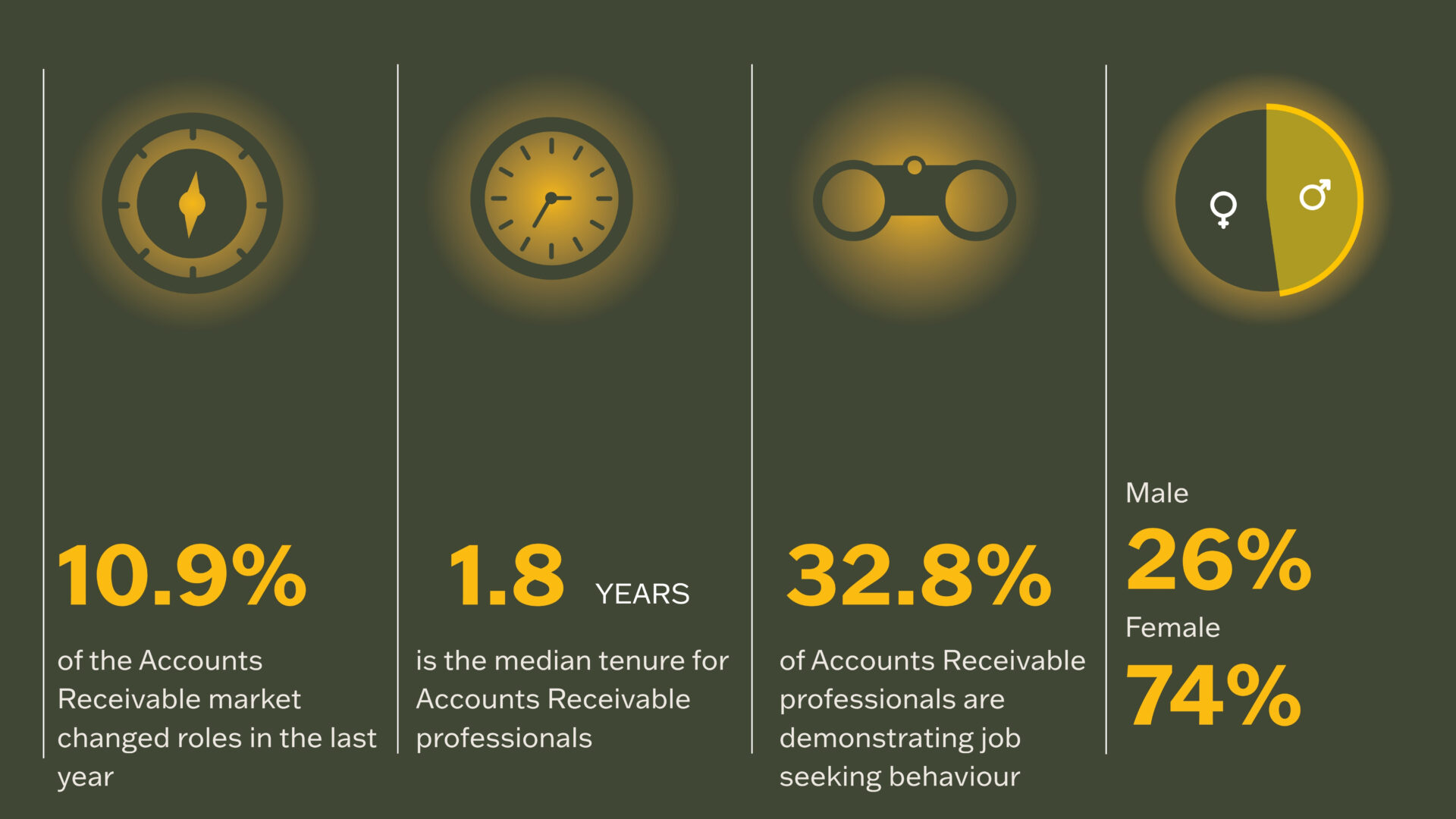
Here’s what we’ve observed this quarter in the AR talent pool in Ireland:
What are companies doing to attract talent?
The AR Leaders and Financial Controllers that we work with use some of the following tactics to make sure they get the best results:
- Competitive base salaries that are talent-led rather than budget-led.
- Additional benefits (bonus, healthcare, working abroad for short periods of time).
- Considered Hybrid working patterns that reflect the nature of the role.
- Pathways for development internally.
- Investing in company culture dynamics.
- Outsourcing or automation.
- Identifying junior talent and investing in upskilling.
#5 Challenges for Attracting & Retaining AR Specialists in Dublin
Career Growth & Recognition AR roles can be seen as stepping stones, leading to turnover if employees don’t feel recognised or see clear advancement opportunities. Organisations must acknowledge the value AR Specialists bring, offering career development plans, regular feedback, and skill diversification to keep employees engaged.
Competitive Compensation & Benefits Attracting AR talent in Dublin requires more than filling roles; it demands competitive salaries and attractive benefits like flexible work, wellness programs, and performance incentives. A supportive environment where contributions are valued is key to job satisfaction and retention.
Adapting to AI & Technological Changes AI and automation are reshaping AR roles, shifting responsibilities and requiring continuous upskilling. Companies must invest in training to empower teams to embrace these changes while ensuring human expertise continues to drive data interpretation, relationship management, and problem-solving.
By recognising these challenges and implementing thoughtful strategies, businesses can build a resilient, engaged AR workforce ready for the future.
In Barden, we understand that each team, role, and requirement is unique. If you would like to discuss what tactics and approaches would suit you, please feel free to contact Phonsie Irwin (Leinster), Tara Higgins (Munster) our AR Talent Advisory & Recruitment team here in Barden (phonsie.irwin@barden.ie; tara.higgins@barden.ie); we’re where leaders go before they start looking for AR talent.
This information is accurate as per April 2026 and will be updated periodically. Data sources include Barden Proprietary Data, LinkedIn Analytics and other 3rd party data sources. If you have a request and would like real-time information to inform your hiring decisions, contact Phonsie Irwin (Leinster) at phonsie.irwin@barden.ie or Tara Higgins (Munster) at tara.higgins@barden.ie.