

 Jump Back
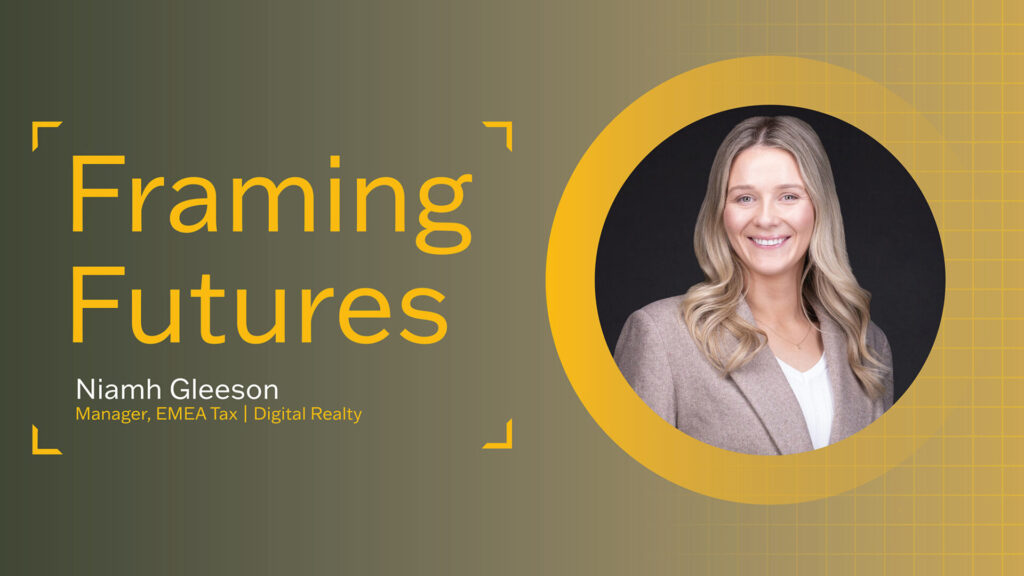

Could you give us a brief overview of your career to date?
I studied accounting and finance at DCU and completed an internship with PwC during the three years of that course. By second year, I knew I was interested in tax, so I went on to do a Masters in Accounting to gain as many exemptions as possible, including CAP2s and Part 1 tax exams. After university, I took a grad contract with PwC Dublin in tax and started my professional exams from there.
I spent four years in PwC, mainly in the property team, working on large property deals in Ireland and internationally. The role involved group restructurings, reorganisations, funding, and extensive corporation tax compliance work. I had a broad portfolio of clients across large corporates, PLCs, property, retail, and hospitality.
I learned a huge amount, gaining exposure to corporation tax, transfer pricing, and stamp duty. I also spent time in the VAT department, building experience in indirect taxes and transaction complexities. That variety gave me a strong foundation and solidified my interest in corporation tax, as it provides real insight into businesses and what drives decision-making.
You moved to Australia after your contract – would you recommend international experience?
I moved over to Australia post-contract and got a job more in finance – not in tax, and not exactly financial accounting either. I was a reporting analyst for a health insurance company. Once the financial accountants had completed their work, I would analyse figures such as revenue and health insurance claims, examine trends, and provide insights for the monthly reports to senior execs.
It was a completely different role and gave me a whole new set of skills to learn. It was totally different, but really good, and I learned so much over there as well.

It’s a completely different way of working, and you get exposed to so many new things. The learnings are massive, and being able to adapt to a new way of working and culture, which is quite different in Australia.
Could you tell us more about your current role at Digital Realty?
Digital Realty provides data centre solutions worldwide, with over 300 data centres globally. With demand for AI and machine learning growing, the industry and businesses are continuing to expand.
At the moment, I’m an international tax manager for the EMEA region. It’s a really broad role. I look after corporate tax compliance and transfer pricing compliance for the EMEA region, as well as deals.
We are constantly expanding into new markets, so I’m heavily involved with M&A, including tax due diligence for new expansions. Quarterly tax provisioning is also a big part of my role. Digital Reality is US-listed and a US REIT, so every quarter we prepare tax provisions for all entities and report back to the US, ensuring we maintain key thresholds required for our US tax status.
I work with international tax and finance teams every day, across Ireland, the UK and wider EMEA — it’s a busy but really exciting role.
Has anything changed dramatically in the time you’ve worked in tax, particularly with AI or other trends?
The biggest change has definitely been technology, and it’s constantly evolving. We have seen greater automation and AI driving greater efficiency in tax work. Corporation tax compliance, for example, has been increasingly automated since I started my career. Paper filing is basically obsolete now. Tax authorities are also leveraging technology to spot anomalies and trigger audits, so it’s not just the Big 4 or international firms using these tools.
Automation is highly effective for improving efficiency and saving time. We are always looking to apply it to remove repetitive tasks.
 For example, this year we automated much of our capital allowances work in Ireland and the UK. That saved a huge amount of time that would have been spent trawling through spreadsheets, and it also cut costs on fees that would have been used for reports and analysis. Automation is transforming tax work, allowing teams to work smarter and focus on higher-value activities.
Over the last few years, many international events have unfolded, including the war in Ukraine, tensions in the Middle East, and political changes. Do these macro global events impact tax systems or how tax is managed globally?
Absolutely. Initiatives like the OECD BEPS Pillar Two illustrate this. For example, the Trump administration’s policies, including the US’s withdrawal from certain agreements, influenced other countries and created uncertainty about when and how these rules would be applied. The global tax transparency framework under Pillar Two is introducing significant complexity.
Macroeconomic factors add additional layers of uncertainty for international companies, which often struggle to determine which jurisdictions within their group must comply. This creates challenges for planning, calculations, and overall organisation.
Looking ahead five to ten years, what challenges or opportunities do you see in tax, both for organisations and for tax professionals?
On an organisational level, Pillar Two again stands out. Tax teams will need access to increasingly granular data to perform the required global calculations. Accounting and finance teams will need to work closely to collect and manage this data effectively.
 If you had to advise someone starting their career in tax, or considering working in tax, what skills and approach would help them succeed?
Tax is ever-evolving and constantly changing, so being curious and proactive is essential. It’s important to build a strong base of technical knowledge in tax and accounting, then continually push yourself to learn and never be afraid to ask questions. Technology is also a key skill — while it can be learned on the job, it’s important to pay attention to it. If ignored, you risk falling behind and won’t be as efficient as someone who can leverage tech, so upskilling in technology is vital.
I’d also advise being open to all the work you’ll experience early in your career — say yes to opportunities, go in with an open mindset, and ask plenty of questions. Building a wide network and seeking mentorship is crucial. I’ve benefited from mentorship programmes at PwC, in Australia, and now at Digital Realty, and there’s always something to learn from more experienced colleagues. Finally, focus on getting your exams done in the early years and use that foundation to explore new opportunities, take on varied work, and grow your career.
If you want to have a 1:1 confidential conversation about your tax or treasury career, contact Aoibhín Byrne (Leinster) at aoibhin.byrne@barden.ie, Kate Flanagan (Ireland) at kate.flanagan@barden.ie, or Aideen Murphy (Munster) at aideen.murphy@barden.ie.