

 Jump Back

If you listen to engineering leaders or hiring managers today, you’ll notice a striking shift in tone: AI is no longer viewed as an exploratory technology or a nice-to-have skill. It has become a core part of the modern engineering toolkit and is increasingly central to how software is built and delivered.
Over the last few months, while working closely with hiring teams on GenAI and agentic AI roles, I’ve seen this shift firsthand. Companies aren’t just looking for people who can use the newest frameworks – they’re looking for engineers with real software fundamentals, architectural judgment, and the ability to deploy AI systems reliably in production. Those patterns heavily shaped the perspective of this article.
Within just a few years, we’ve gone from “it would be cool to add AI” to “our competitors are already doing it – why aren’t we?” In that context, both software engineers and hiring managers are being pulled into a new reality where AI literacy is the baseline and agentic AI is rapidly emerging as the most important differentiator.
This new wave is transforming the hiring landscape, redefining the skills companies value, and reshaping the type of portfolio or experience engineers need to stay competitive. In this article we’ll explore what this all means.
AI Has Moved From Innovation to Infrastructure
For years, AI was seen as a niche discipline with a relatively small number of specialists working on model training, prediction pipelines, or traditional machine learning. But the rise of generative AI and agentic AI systems has expanded the expectations dramatically.
Today, companies expect AI to be woven into their products, internal tools, analytics, and software development processes.
This shift means that the engineers responsible for building products are now expected to understand how to design systems that interact with large language models, use retrieval pipelines effectively, integrate with AI infrastructure, and maintain these systems with the same level of reliability and rigour required for any production environment.
As AI systems scale, engineers should also be mindful of sustainability, optimising for energy-efficient operations and responsible use of cloud resources. This dimension was highlighted in our Future of Tech series, showing that AI’s ability to distil massive datasets comes with both opportunity and responsibility – reinforcing the need for thoughtful, production-minded deployment.
And at the heart of this shift is the concept of agentic AI.
Agentic AI
To understand why agentic AI is driving such intense demand, it helps to know what makes it distinct. Traditional GenAI models respond to prompts – Agentic systems perform tasks.
They can reason through multi-step objectives, decompose them into sub-steps, call external tools or APIs, persist memory, collaborate with other agents, and iterate until the task is complete. Agentic AI steps into tasks that traditionally needed human coordination and judgment.
Real-world examples already in production include:
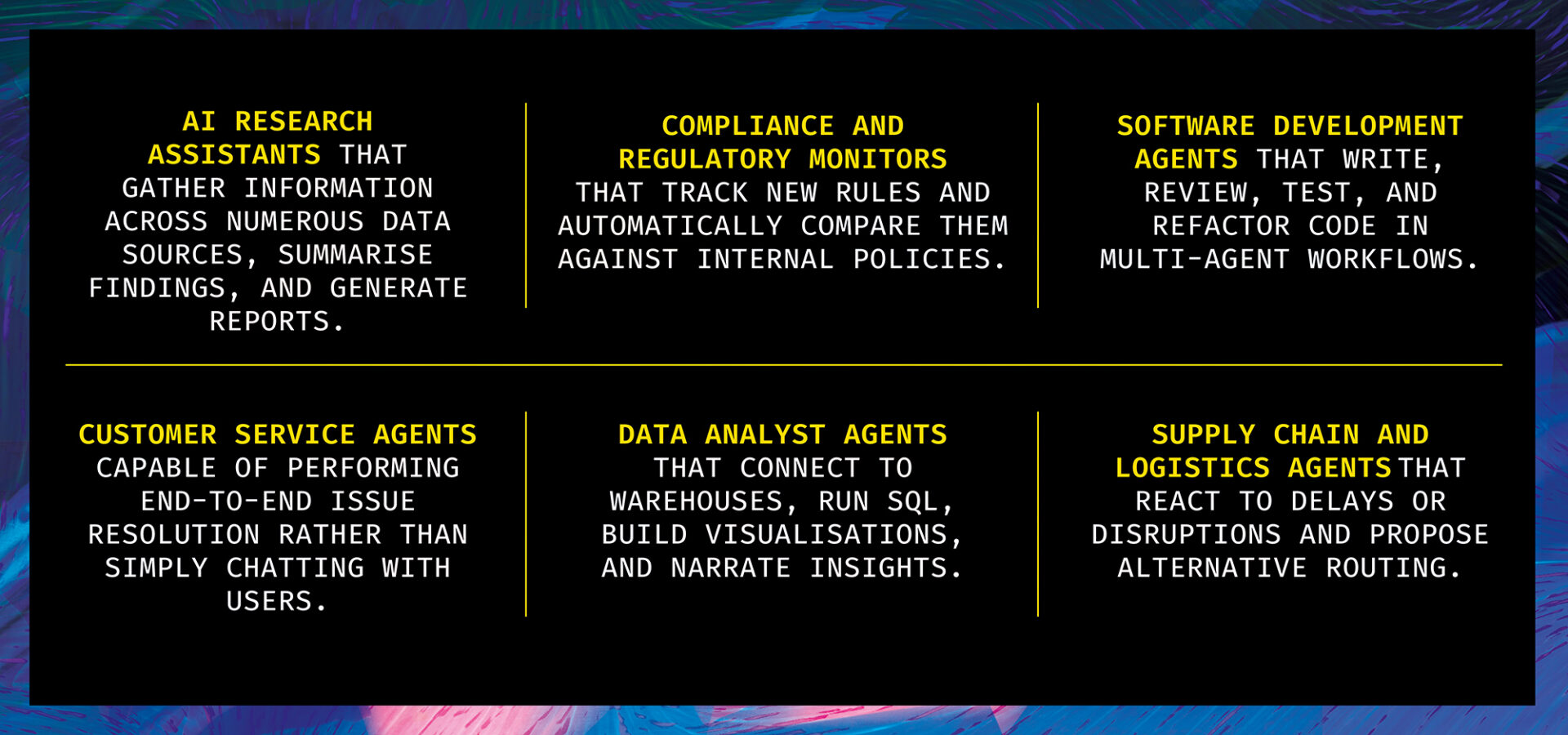
Engineers with the skills to build these systems are in extremely high demand across the industry.
What Companies Are Looking For
When you look closely at the new generation of AI-focused job specs, a clear pattern emerges – companies want engineers who can build production-ready, orchestration-heavy GenAI systems, not just experiments or prototypes.
This includes familiarity with the frameworks that have become the backbone of agentic development.
Some of the most commonly requested include:
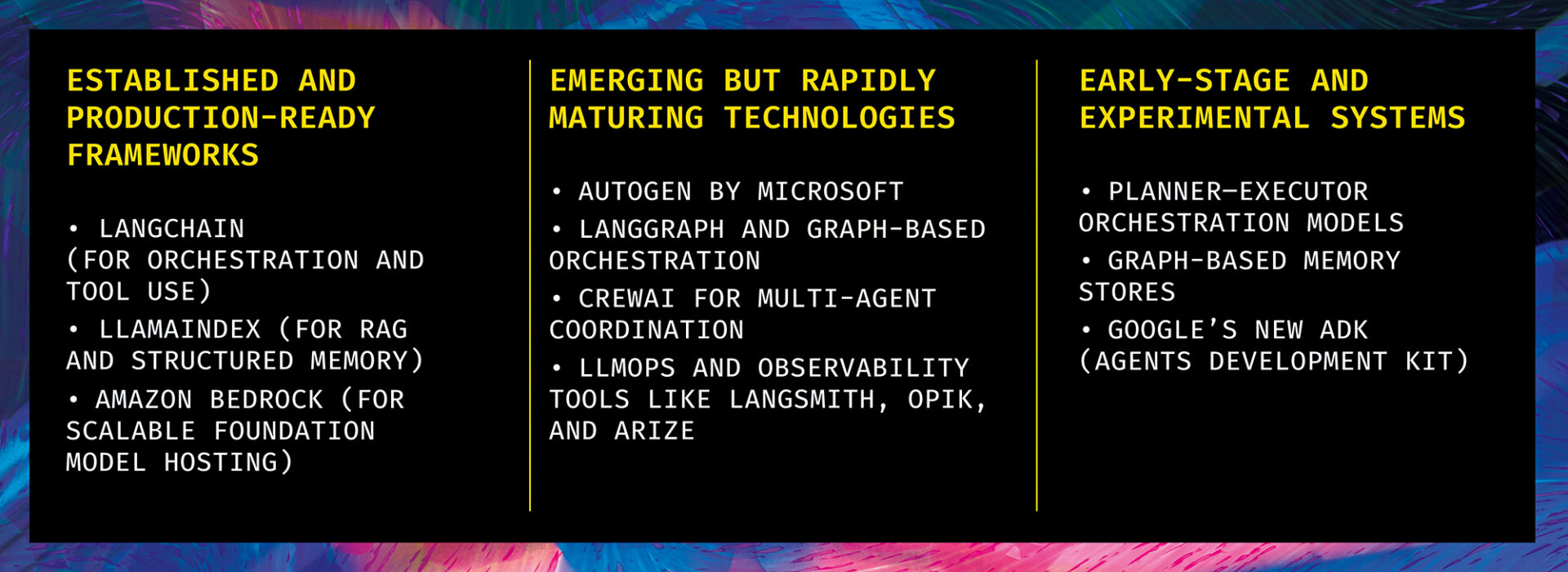
Companies are not looking for generalists who have played around with LLMs – they want engineers who can make informed architectural decisions.
The Skills Hiring Managers Value Most
Hiring managers want engineers who can build systems and control how they behave in real-world conditions – handling latency, scaling, cost control, evaluation, and safety.
Some of the most valued skill areas include:
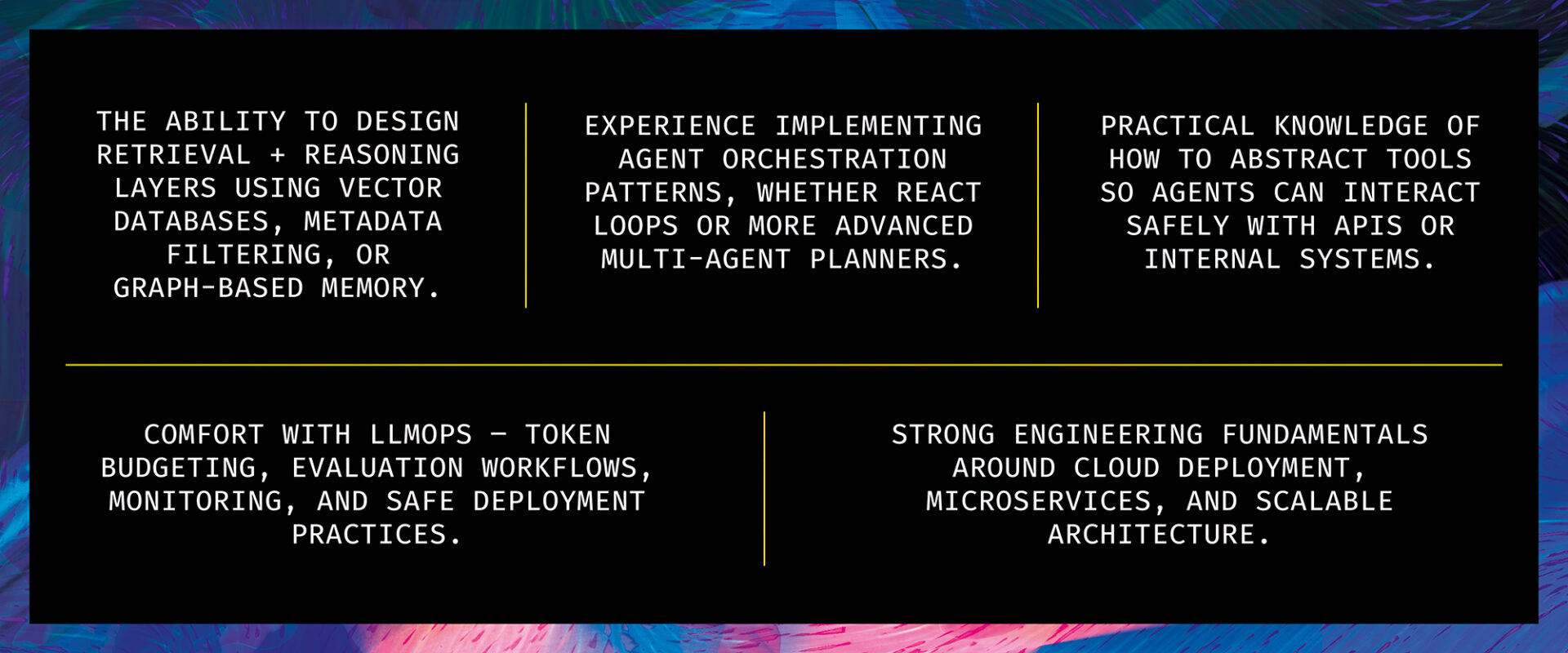
This is essentially the new ‘full stack AI engineer’ which we touched on in a recent blog (*hyperlink*).
Certs Are Only the Beginning
Another thing to consider is how hiring teams are trying to separate superficial credentials from genuinely valuable training. Certs from AWS, Azure, and Google Cloud (especially the new GenAI-specific ones) carry real weight because they reflect current industry standards. Courses from DeepLearning.AI, Coursera, Pluralsight, and newer agentic-framework providers like LangChain or LlamaIndex are also respected for their focus on practical, applied skills.
But even with strong credentials, hiring managers consistently emphasise one point: certs and courses help, but production-ready projects tell the real story.
Why Production Experience Matters Most
What stands out to hiring managers is evidence of systems that operate under real-world conditions – projects that demonstrate deployment, monitoring, reliability, and usability. These don’t have to be commercial products; even personal work can be impressive if it behaves like production software rather than an experiment.
Examples of such kinds of personal projects include:
- A multi-agent workflow deployed to AWS or GCP, complete with logging, monitoring, and alerts
- An AI-powered internal tool (e.g., compliance monitoring, report generation, code review) that others within your organisation actually use
- A RAG + agent system with evaluation loops, reasoning layers, and tool integration
The real signal is your understanding of production realities: failures, debugging, cost controls, security, scalability, and observability.
The challenge, of course, is that this environment is evolving quickly. But staying close to real initiatives in your organisation – contributing to deployments, adding features, improving reliability, or supporting evaluation work – helps you build the kind of grounded experience hiring managers prioritise far above completing lots of certifications.
For Engineers: How to Stay Competitive in This New Era
The clearest path to relevance is to build one or two substantial projects that demonstrate your ability to work with modern AI tooling. Even a single well-executed project that includes RAG, orchestration, tool use, deployment, and monitoring will set you apart from the majority of applicants.
Beyond that, engineers should focus on understanding the architectural implications of AI: when retrieval makes sense, when fine-tuning is appropriate, when tool use is safer than model reasoning, and how to design workflows that are cost-efficient and stable.
These kinds of decisions are what engineers increasingly get hired for.
For Hiring Managers: How to Hire Well in a Rapidly Changing Field
Hiring in this space requires a new lens. It is no longer reasonable or useful to evaluate talent based on “years of experience” with GenAI or agentic systems. These technologies are simply too new. What matters is a person’s ability to reason about system design, explain trade-offs, demonstrate production-minded thinking, and show real evidence of building AI into usable products.
Hiring managers should look for engineers who speak fluently about failures, bottlenecks, monitoring strategies, deployment challenges, and safety considerations. These are the hallmarks of engineers who will build reliable systems, not just prototypes.
The Bottom Line: AI Skills Are Becoming Core to Modern Engineering
We are in the midst of one of the most significant shifts the software industry has ever seen. AI (particularly agentic AI) is becoming a foundational layer of the technology stack, reshaping engineering roles, altering organisational structures, and creating opportunities for those who embrace the change and approach it thoughtfully.
At the same time, not every AI initiative delivers immediate value. Organisations are asking harder questions about cost, impact, and responsible adoption. For engineers, this is a moment where a measured investment in practical AI skills can dramatically accelerate a career. For hiring managers, it’s a chance to identify and nurture talent who understand both the technology and its business implications.
The future of software development is intertwined with AI. Success will go to those who adapt quickly, but wisely, to this new reality.
Connect with Rachel on LinkedIn or contact her at rachel.mcguckian@barden.ie