

In this episode of Leaders for Better, we sit down with Derek Foley Butler, Founder and Executive Chairman of GRID Finance, Ireland’s first financial services B Corp.
Derek founded GRID Finance in 2013 with a mission to build the financial health and resilience of Ireland’s SMEs. After qualifying as a chartered accountant with PwC, he moved into development work with GOAL in Uganda and Haiti, where exposure to the transformative power of microfinance sparked the idea for GRID. Since then, GRID has helped over 3,500 businesses with more than €150 million in funding, and Derek was named EY Established Entrepreneur of the Year in 2025.
Did you choose leadership or did leadership choose you?
It’s probably a little bit of both. Those who have a desire to lead, it’s a really instinctive thing. But ultimately, you have to choose as well, and you have to lean in to leadership, whatever the context you’re in.
Are there any leaders who inspire you, and why?
There are probably a couple that have really inspired me. Muhammad Yunus, who was the founder of the microfinance movement and won the Nobel Prize for the founding of Grameen Bank in Bangladesh. He was extraordinary because he lifted a whole generation of people in poverty in Bangladesh out of that poverty with his microfinance model.
It probably sounds like a bit of a cliché, but I’m a huge fan of Barack Obama and what he stood for. His presidential library is opening this year in Chicago, and I can’t think of a better time for that message of hope and change than now. Maybe he was 15 or 20 years too early, but he’s always been a huge inspiration in his ability to articulate his message.
What would you consider to be important traits of a leader?
It’s a mixture of clear vision and ability to execute.
Finding the right resources, mobilising the right people, providing clear direction – all of those skills. But it’s having that really clear vision and then the ability to execute.
What’s the best piece of leadership advice you ever received?
The best piece of advice I would have received is to be over the detail. I worked really closely with Donal O’Connor in PwC. He was the managing partner there, and he was brilliant because he had a really clear vision and a really clear perspective on what he wanted to achieve. But he was always over the detail, and he was able to lead because he was over the detail.
What’s the worst piece of advice you have ever received?
The worst piece of advice I received was to disregard your team. I remember when I worked in GOAL, there was a senior executive there who wanted me to disregard the views of my own team. I think you do that at your own great peril.
 That was his particular leadership style, which I didn’t want to adopt.
What’s the hardest leadership trait to hire for?
Fit with the context is really important. You can spend a lot of time with someone interrogating their experience, their skills, doing all of the personality tests and the rest of it. But fundamentally, can they work with the team of people that are already in that business?
For me, the way I solve for that is I don’t do any of the textbook stuff, because that will all have been done. I always finish the process with a practical exercise or activity. When I’ve been hiring people into the business, we’ve often brought the successful candidate out on a final hike into the mountains with some of the leadership team — just to do the sanity check to make sure that we can actually work together. At the end of the hike, if we’re all making the right eye contact, they get offered the job.
How did a hike in the mountains become part of your hiring process?
It was a very intentional thing. I’ve worked in organisations with really rigorous hiring processes, and they still haven’t worked out. When I set up my own business, I thought about how we could have this extra step that might mitigate the risk of the hiring process not working out. In a small organisation, it is incredibly damaging when a hiring process doesn’t work out. So it was a very intentional decision.
It’s worked out well — we’ve never had an adverse outcome when we’ve brought somebody on a hike, which probably says something. But it is a really useful way for both sides to sense-check that we’re all on the same page.
How does being a B Corp business change how you make day-to-day decisions?
We’re really passionate about making a positive impact — doing well, but also doing good. It impacts our decisions very subtly on a day-to-day basis, right down to how we treat customers. We put huge pride in our NPS score, and we know that if we’re scoring high, then we’re having a really positive impact on that customer.
It extends even to things like customer selection. There are certain customer cohorts in our business that have very low levels of profitability. But because we’re an impact business, we want to continue to serve them, because they’re financially excluded and struggle to access capital.
You’ve previously spoken about the future being “un-model-able”. How does that shape the way you run your business?
If you work on the basis that there are certain megatrends and macro issues that you can’t model for, it immediately takes a lot of pressure off you and your teams. It forces you to accept the things you can’t control. We live in a world that wants to model every decision and every outcome, but with these megatrends and macro issues, you just can’t. What it does is it relaxes you and allows you to focus on the things you really can control — how you engage with your customers, how you engage with your staff, and how you build an understanding of where they’re at at a ground level. Those are things you can control. The really big megatrends, you simply can’t.
What is your vision for the future of business?
We want to be the reference point in Europe for impact-driven finance — the standard bearer for a forward-thinking, future-focused fintech lender. Not just in terms of products and offerings, but in terms of impact in the communities it operates in.
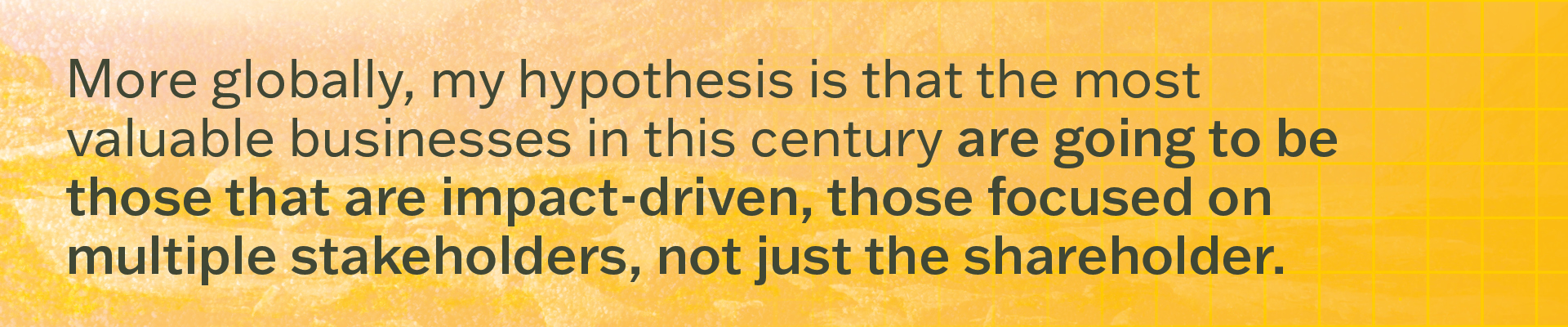
They are, in the long run, going to be the most valuable companies. That might be difficult to believe now when you look at the US stock market, but I think there is really big seismic change coming in terms of how we organise markets and capital. The companies that are engineered to be impact-driven are going to be the ones that truly win in the long term.
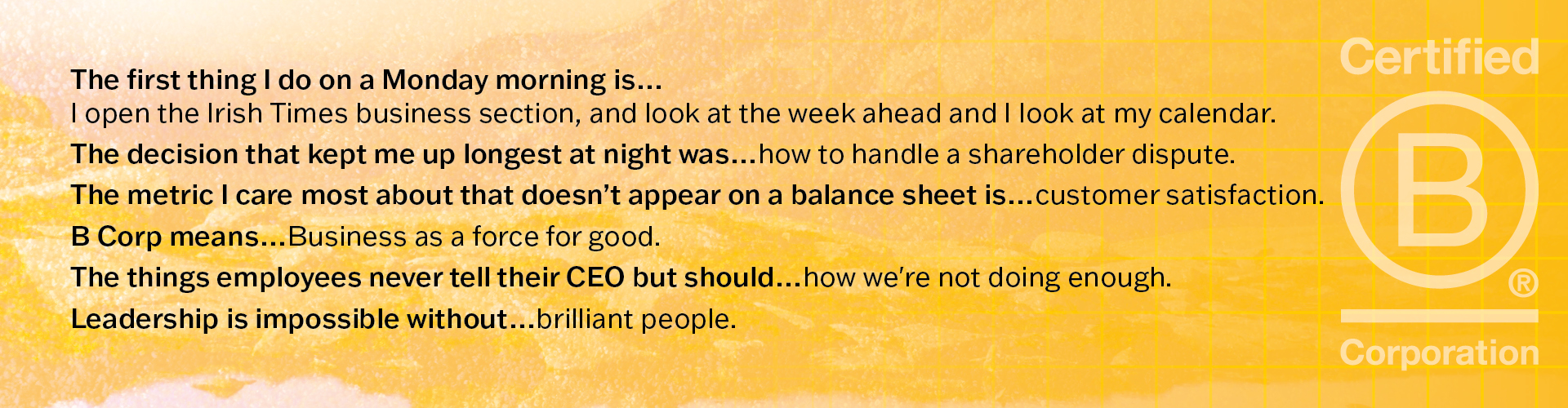
Quickfire Round
About Barden
Barden is a partner-led talent advisory, recruitment, and executive search firm, with practices across Accounting, Legal & Tax, Technology, Transformation & Change, and other strategic business appointments.
We are passionate about people and work with organisations and individuals who believe talent decisions truly matter. We are proud to be B Corp Certified, using our business as a force for good. Innovative, ambitious, and united by shared values, we are a team of uniquely different personalities who are relentless in supporting each other and those we work with.
In Barden, we really know the value of people; work with us to uncover yours.