

If you’re hiring a HR professional this quarter, here are some things you need to know…
No matter the industry, scale or organisational structure of your business, HR more than likely plays a part in the day-to-day capabilities. Over the years the complexity and influence of HR has grown from an internal support function to a strategic, externally aware value creator in the modern organisation. So, spending a little time understanding your business and where this person will add value, is a key first step before making a hiring decision.
That’s where we come in… our HR Practice in Barden partners with organisations in a number of different capacities, the most common of which are listed below.
- Appointing a new HR individual to their business to join an existing function where process, procedures and systems are already in place.
- Building a HR function and bringing a HR professional in-house to set up that function. Typically, a senior individual who will hire a team (if necessary) in time.
- At a strategically important moment, businesses typically require stability and forward thinking to navigate growth, new markets, stability during change and/or following funding. Appointing the right senior HR professional is imperative to success.
The talent monitor below outlines the key considerations for employers hiring at any stage along their journey.
#1 Balance of Activity
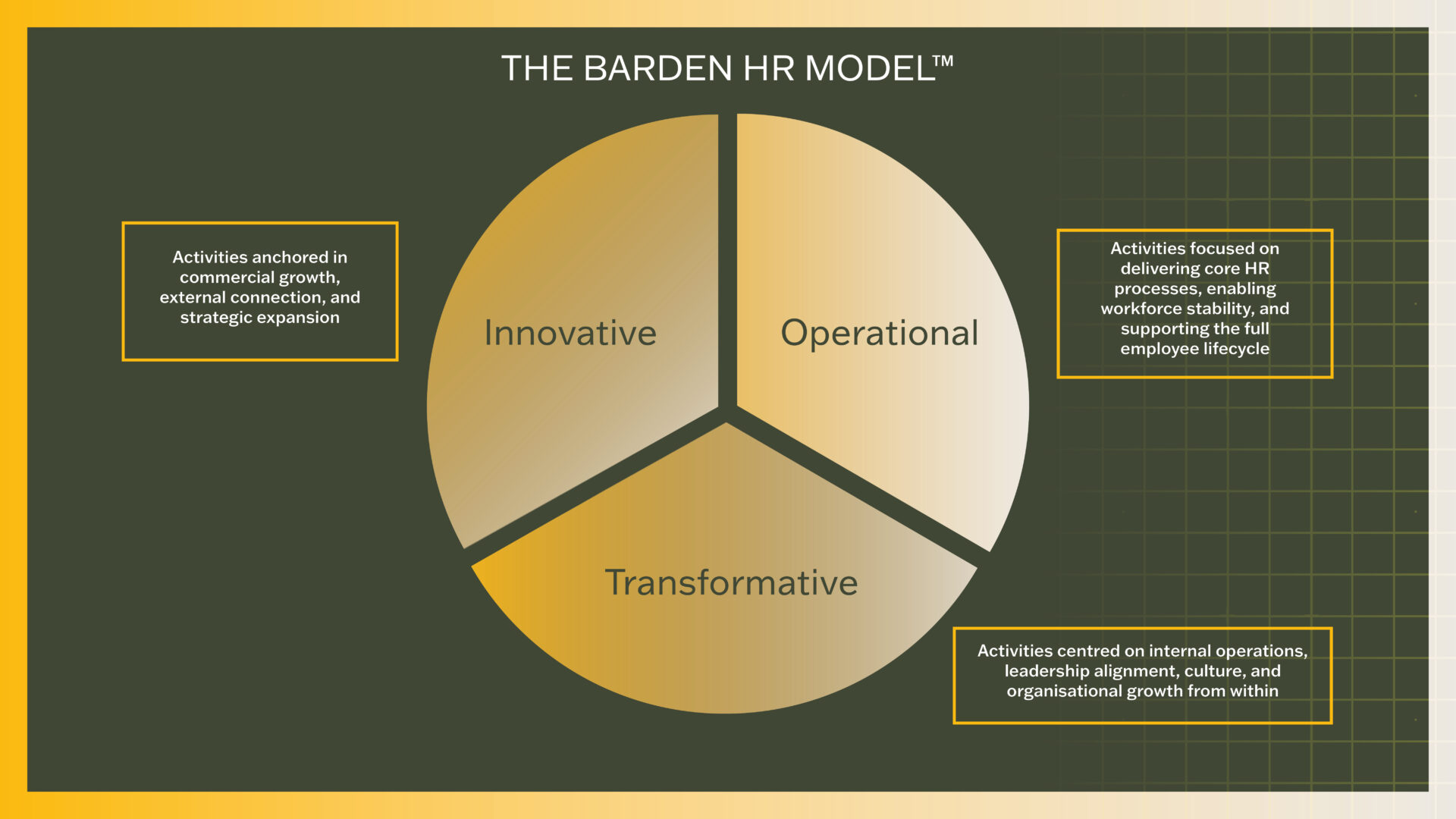
As David Ulrich suggests, HR functions should be compartmentalised into key segments, because HR activities deliver different types of value, understanding and separating them allows businesses to focus, specialise and deliver strategic impact more effectively.
In Barden we look at HR not as a single function, but as three distinct yet interdependent segments:
- Operational
- Transformative
- Innovative
Each segment serves a different purpose in enabling the organisation to function today, evolve tomorrow and design what comes next. This lens helps us be explicit about where HR effort is focused, what type of value is created, and what the business actually needs from HR at different moments in time.
Let’s explore these segments in more detail.
- Operational Segment
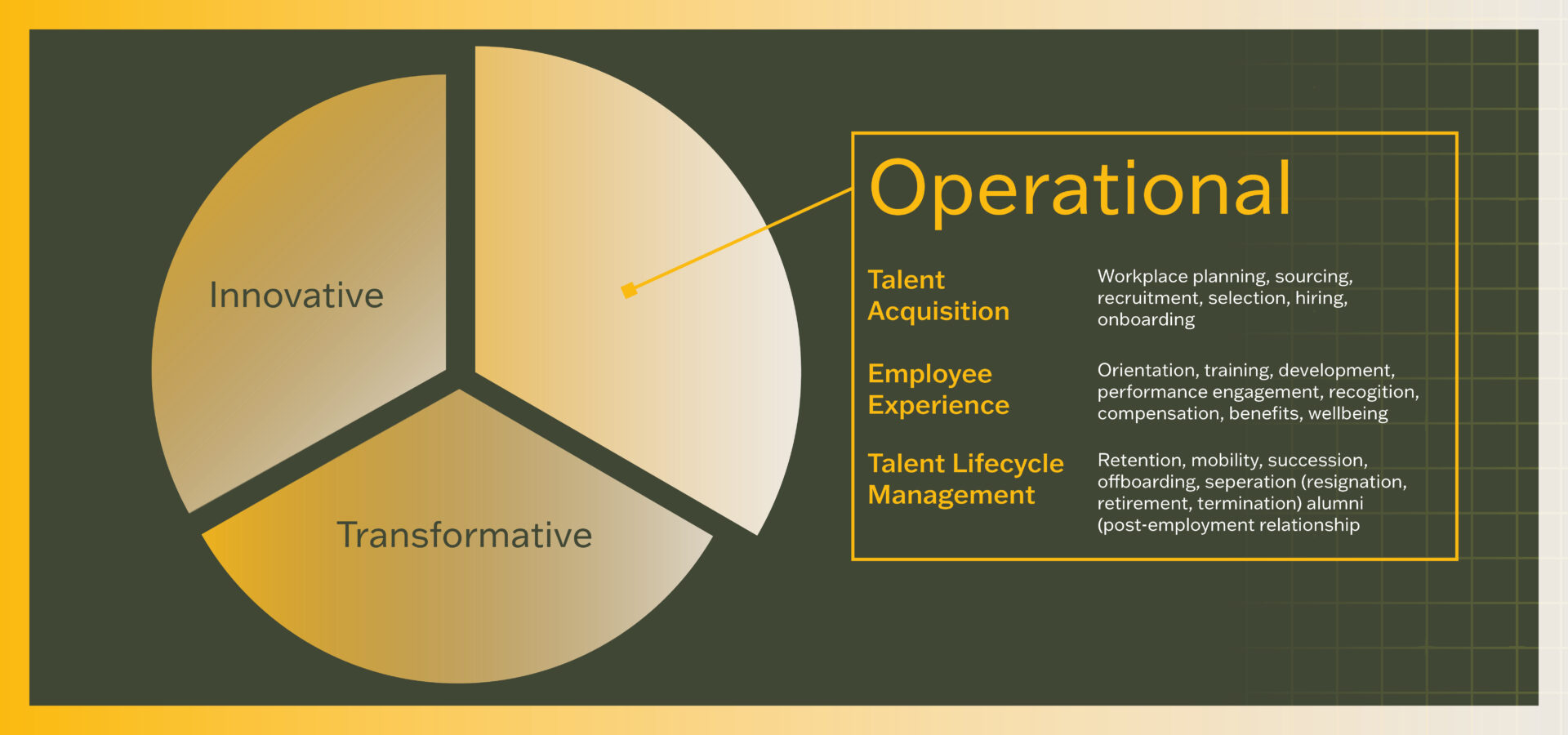
Operational HR manages the foundational employee lifecycle (hire to retire), and day-to-day people processes aka “runs the business”. The purpose of this role is to enable stability, compliance and consistency of processes, it’s the foundation of HR functions.
Typical activities in this segment include talent acquisition, employee experience and talent lifecycle management and all that encapsulates those subcategories. Without this strong operational HR segment, trust can erode quickly, it removes (or addresses) friction and ambiguity and frees the organisation from spending cognitive energy on the basics.
Strong Operational HR is a critical foundation; on its own it sustains the organisation, and when combined with transformative and innovative work it enables progress.
- Transformative Segment
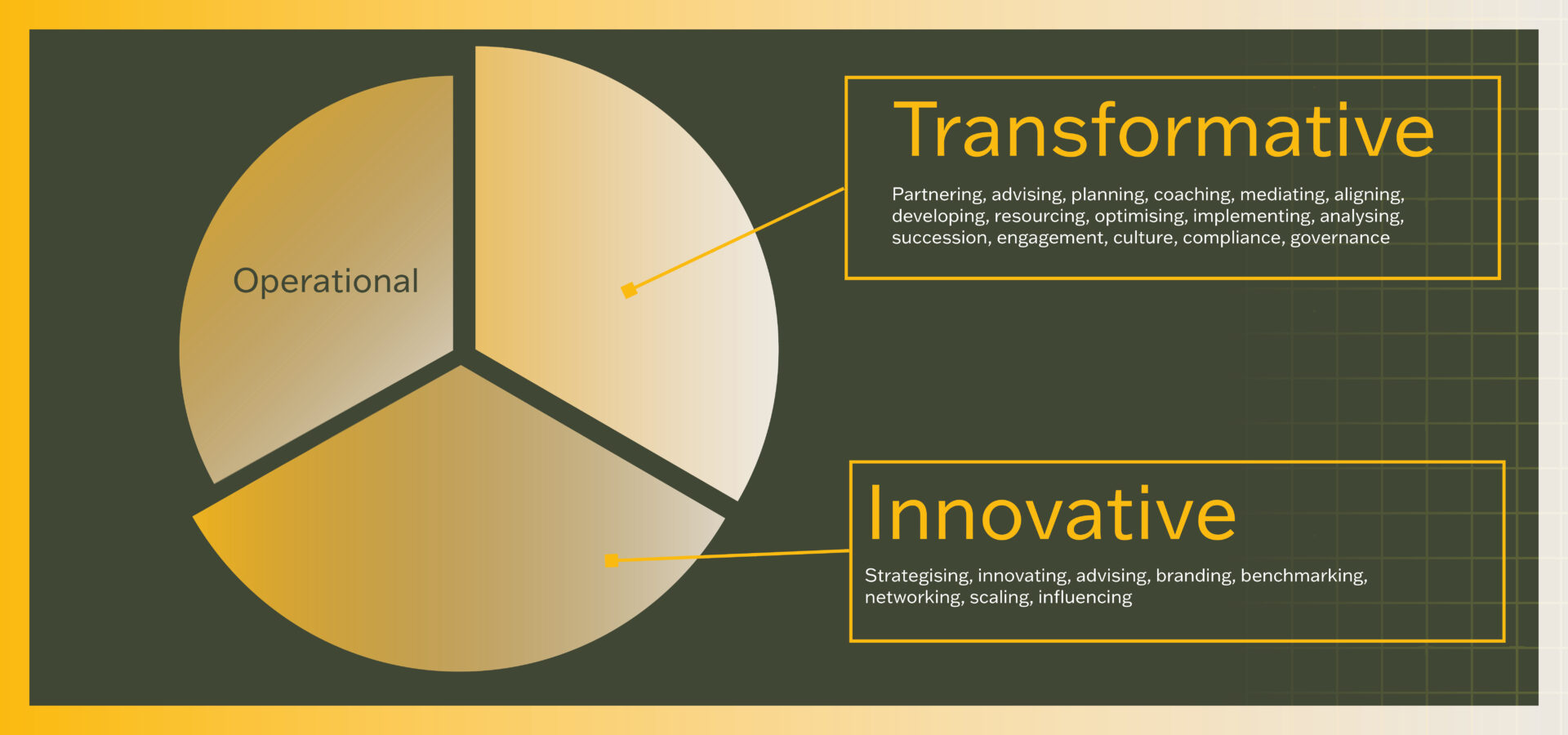
Now, let’s look at transformative. This segment focuses on intentional change. This is where HR helps the organisation evolve how it works, how leaders lead, and how teams perform. As outlined above it typically involves leadership development, performance/feedback/goals, organisation design, cultural evolution and change initiatives. This segment is key as organisations don’t stand still, but even stability requires change. These individuals assist with new ways of working under growth, scale, or restructuring demands. This is where HR directly impacts outcomes, not just employee experience!
Transformative HR ensures the organisation is not just compliant but fit for purpose, turning strategy into behaviours, structures and skills.
- Innovative Segment
Finally, let’s discuss Innovative HR. This segment is focused on looking beyond today’s needs and in some instances even beyond planned change. It focuses on emergent challenges, new ways of working, and untapped value. Activities that exist in this segment include new organisation models, experimentation with AI and automation, workforce strategy, predictive thinking, and reimagining HR’s role itself.
Innovative HR is not about being trendy. It is about creating optionality. This segment is crucial as the pace of change outstrips traditional planning cycles, organisations that don’t experiment fall behind quietly, then suddenly… this segment allows for small, thoughtful experiments that give organisations confidence and adaptability for the future.
The distinction between Transformative and Innovative HR is less about ownership and more about intent- improving how the organisation works today versus exploring what it may need tomorrow, with a fluidity between the two.
To wrap up…
In a function where everything can feel equally urgent, this model allows us to distinguish what must be rock-solid, what needs deliberate improvement, and what deserves exploration. It also helps avoid the “strategic vs administrative” divide by recognising that HR creates different kinds of value at different altitudes, all of which are necessary.
Our model scales easily, whether HR is a single individual or a mature team, because the segments are conceptual rather than tied to roles, hierarchy or titles. Crucially it reflects how change actually happens- operational HR creates the stability for transformation, transformative HR highlights where innovation is required, and innovative HR reshapes what eventually becomes standard practice- with value flowing continuously between all three.
Key point: Importantly, these segments are not measures of seniority: people can build deep, senior careers in Operational HR just as they might begin there, and while most senior HR leaders often focus on the Transformative or Innovative space, this is shaped by organisational need rather than hierarchy. We’ll talk more about titles and compensation later…
#2 Variables that Exist
There are some other things that matter when hiring a HR professional. It’s important to remember what “good” HR looks like is shaped by context. Practical variables such as organisational headcount, geographic footprint, jurisdictions, and required legal or regulatory knowledge all materially shape what “good” looks like, as do specific challenges such as scaling, restructuring, or niche projects.
Beyond this, emotional intelligence and core soft skills are non-negotiable in a deeply people-centric function. Finally, culture matters: HR effectiveness is tightly linked to how well the individual understands, shapes, and aligns culture with strategy, rather than treating culture as a by-product of process.
As these variables change, so too does the emphasis across operational, transformative, and innovative HR, reinforcing the need for balance and flexibility shaped by organisational needs, rather than title or seniority.
#3 Job Titles
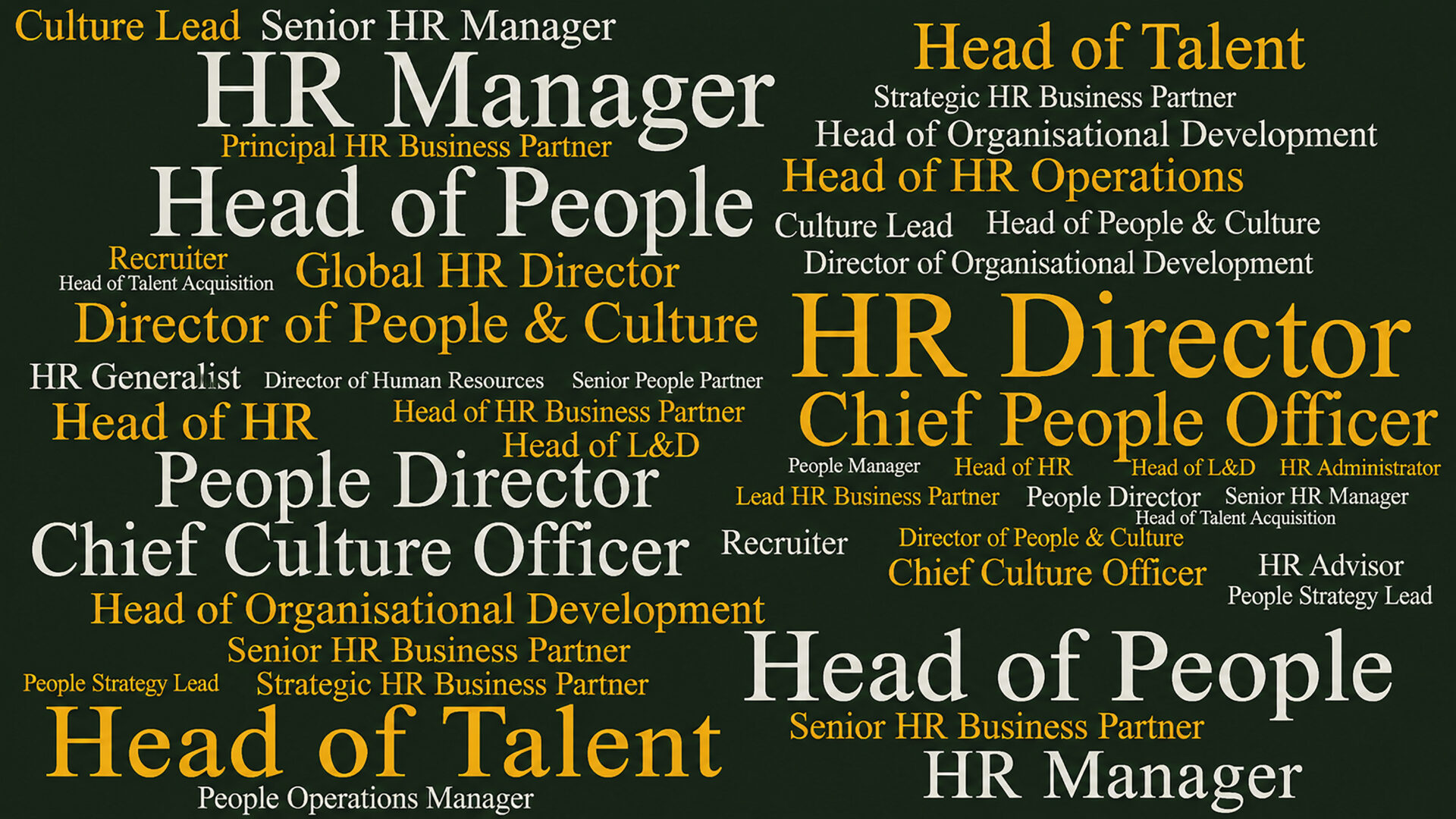
As you can see in the image above, job titles in HR are numerous, inconsistent, and highly context specific. Some reflect market norms, while others are entirely company-defined, meaning the same title can signal very different levels of scope, influence, and responsibility. For example, a “Head of HR” in one organisation may be equivalent to a “HR Director” in another, just as “Senior HR Business Partner” in one context may closely resemble a “HR Manager” in another. Without understanding the organisational context, titles alone offer little clarity on where an individual sits on the model, their true seniority, or the nature of their work.
While there are broad contentions – Chief People Officers (CPO) usually represent the most senior, c-suite HR roles. HR Directors and Heads of HR are typically very senior and often operate in the transformative space with exposure to innovative – these are tendencies rather than rules. Ultimately, it is the work being done, the balance of activity, focus and scope of impact, that provides the most reliable indication of where someone operates across operational, transformative, and innovative.
There is merit in being market‑led when deciding on job titles, but equal importance should be given to internal consistency and clarity of role within your organisation.
When deciding on a HR job title, it is more useful to focus on where the role sits on the model, the work the individual will actually be doing, and how this aligns with your organisation’s internal norms.
#4 Salary
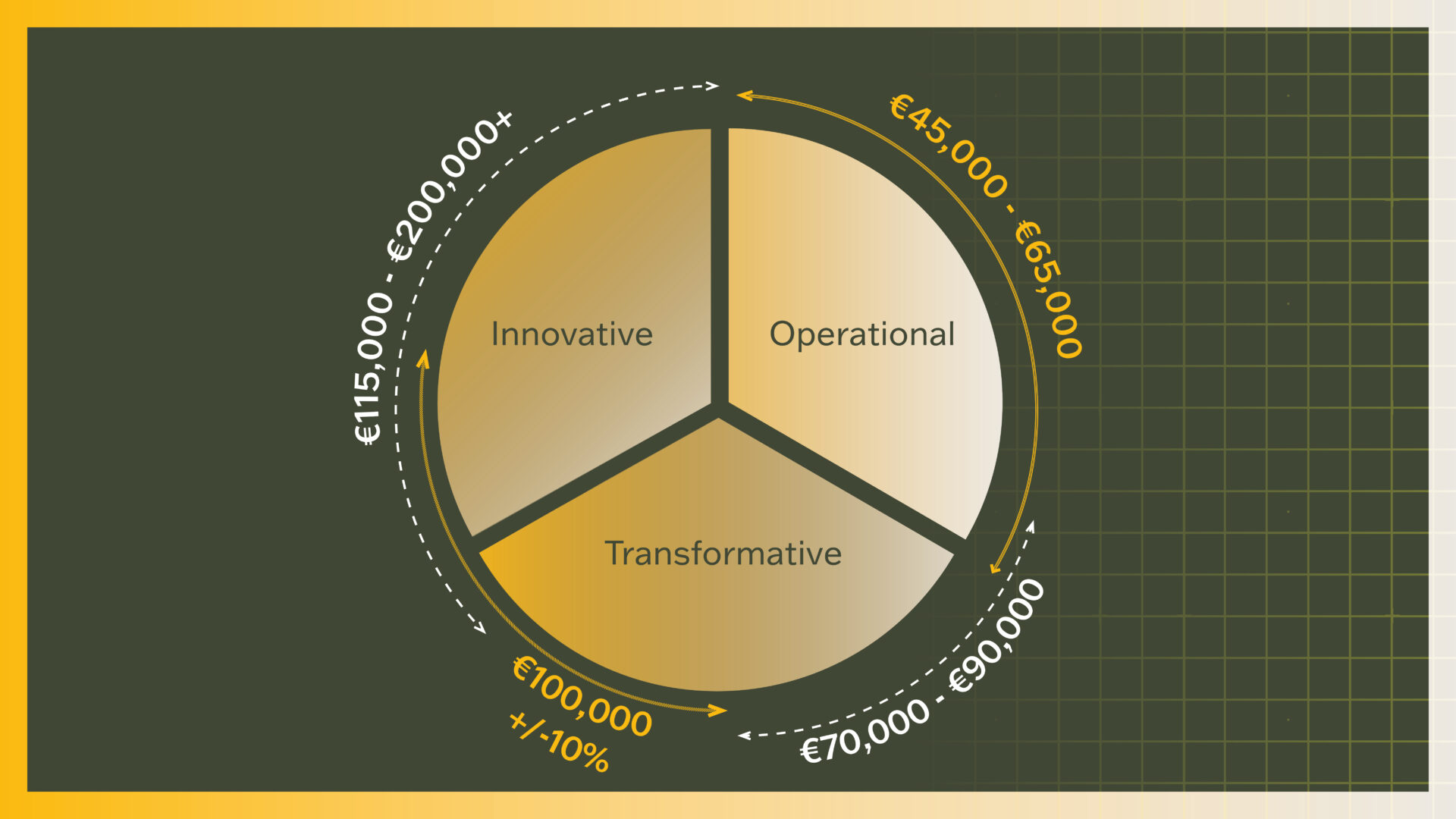
When thinking about salary in HR, it is more useful to focus on activity and scale rather than job titles. Remuneration is driven by the type of work being done, the level of responsibility carried, and the organisational structure/context in which that work sits. Some key points to guide your thinking…
- Salary follows activity, not title: what a HR professional actually spends their time doing is a stronger indicator of compensation than the title attached to that role.
- The balance of activity matters, a lot: The proportion of operational, transformative, and innovative work significantly influences both who is appropriate for the role and what level of remuneration they might expect.
- Scale amplifies impact: Headcount, organisational complexity, geographic spread, and exposure to senior decision-making materially affect salary expectations.
- Ranges over fixed salary bands: There is meaningful overlap between all three segments. Highly experienced operational roles can sit alongside transformative roles, while transformative roles may overlap with innovative ones depending on scope and influence.
- Innovative segment salaries are typically higher- but not by default: Higher salaries in this space are driven by enterprise-level impact and ambiguity, not by the “innovative” title alone.
The accompanying visual reflects this reality, indicative salary ranges overlap across segments, reinforcing that balance of activity and scale of responsibility are better guides than segment classification, or titles, alone.
Some case study examples as illustrations of the above are…
- An operationally focused HR lead in a large Irish business with global reach (c.100 employees, established HR function). An end-to-end HR focused role with delivery across employee lifecycle, stability and process. Salary €65,000 base.
- A blended transformative & operational role combining hands on HR operations with coaching, advisory support, and project focused. Salary €85,000 base.
- Senior individual in a transformative and innovative mix within a large Irish owned business, headcount of c.40 people, who recently received funding and was introducing Hr as a new function at a time of scaling. This role spanned everything from day-to-day operations to project leadership, implementation and leadership of managers. Salary €110,000 base.
- A senior individual joining at c-1 level, in the innovative segment with a direct influence over business strategy, commercial projects, and senior influencing. Salary €145,000 base.
- Chief People Officer (CPO) in a large Irish organisation with significant headcount and complexity, responsible for leading the HR function at enterprise level, shaping people strategy, and influencing business direction. Salary €215,000 base
These real-life examples demonstrate the nuances in the market, they show that salary aligns with complexity, autonomy, and value creation, making clarity on role scope and expectations essential for both employers and talent.
#5 What businesses are doing to attract talent
Doing your homework before sitting down with a Senior HR professional is important, for you and for them… let’s have a look at what we are hearing from the market…
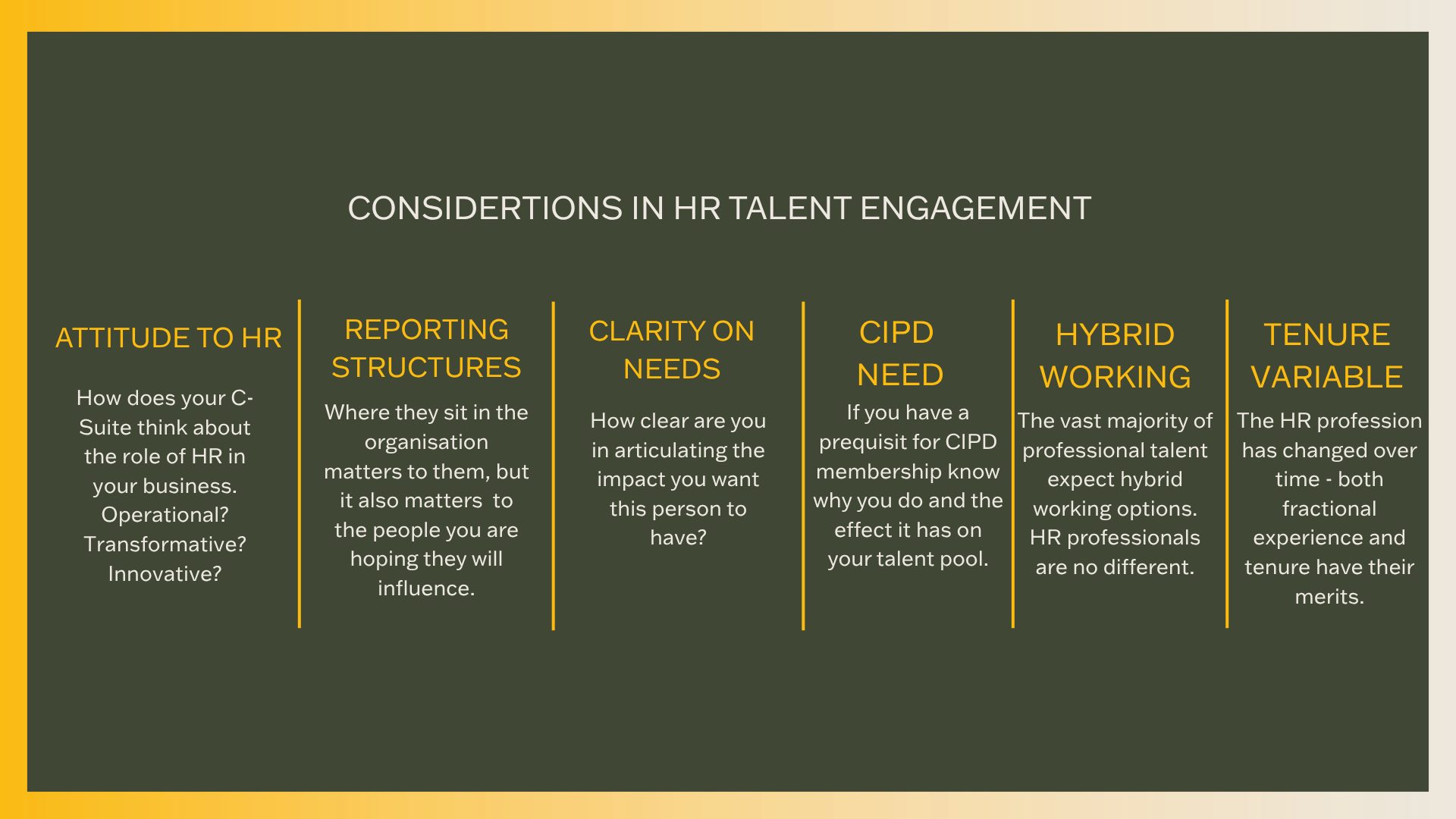
Ultimately, the message is simple: the more clarity, flexibility, and strategic intent you bring to the table, the higher the likelihood of attracting and securing the right senior HR talent.
In Barden, we understand that each team, role, and requirement is unique. If you would like to discuss what tactics and approaches would suit you, please feel free to contact Cole Carroll our HR Talent Advisor & Recruiter here in Barden (cole.carroll@barden.ie); we’re where leaders go before they start looking for HR talent.
This information is accurate as per May 2026 and will be updated periodically. Data sources include Barden Proprietary Data, LinkedIn Analytics and other 3rd party data sources. If you have a request and would like real-time information to inform your hiring decisions, contact Cole Carroll at cole.carroll@barden.ie.